
Lonestar Plumber in The Colony
Plumbing Leak Detection Flower Mound, TX
Plumbing leak detection in Flower Mound follows one rule: locate the leak before cutting anything. The meter test, the isolation valves and the listening gear come first. You see the marked spot and hear what likely failed, and no wall, floor or yard is opened until you have signed off on the repair and its cost.
Flower Mound homes and plumbing leak detection
Every search starts at the meter, which the Town owns and keeps in a box near the street. A dial that creeps with the house quiet means water is escaping somewhere, and the first question is whose side. Inside town limits, the Town looks after the equipment from the rear meter coupling nut down to the main. Past the meter tail, the line belongs to the house. A leak in the box itself or toward the street is a call to the Town, not a detection job.
Sprinklers come out of the picture next. Even-numbered addresses water Tuesday and Friday and odd-numbered ones Wednesday and Saturday, so a meter test reads cleanest on the other days with the controller off. Hand watering and drip lines are allowed any day, though, and a soaker hose left running fools a meter test as well as any sprinkler. Irrigation has its own suspects: a double check valve or an RPZ on the backflow assembly can weep for months, and a split lateral under the lawn leaves no puddle in heavy clay. Those are ruled in or out before anyone listens to a wall.
Inside, the age of the house names the likely culprits. Because the median build year is 1997, most homes in town carry copper or plastic supply lines through or under the slab, and some early-1990s houses still have gray polybutylene. Closing the angle stop at the meter, or the house valve near the front hose bib, lets the plumber split the yard line from the house and pressure-test each side on its own. Drains are handled differently, since they leak only while water runs: each fixture is run alone while moisture is read below it.
Flower Mound at a glance
- County
- Denton County (a small part in Tarrant County)
- Typical home
- Median year built 1997
- Water supply
- Town of Flower Mound, buying treated water from UTRWD and Dallas
- Permit office
- Building Inspections, Town Hall, 2121 Cross Timbers Rd., 75028
- Permit portal
- eTRAKiT online permitting and inspections
- From our office
- About 13 miles from our Main St office in The Colony, mostly by SH 121
Signs water is escaping out of sight
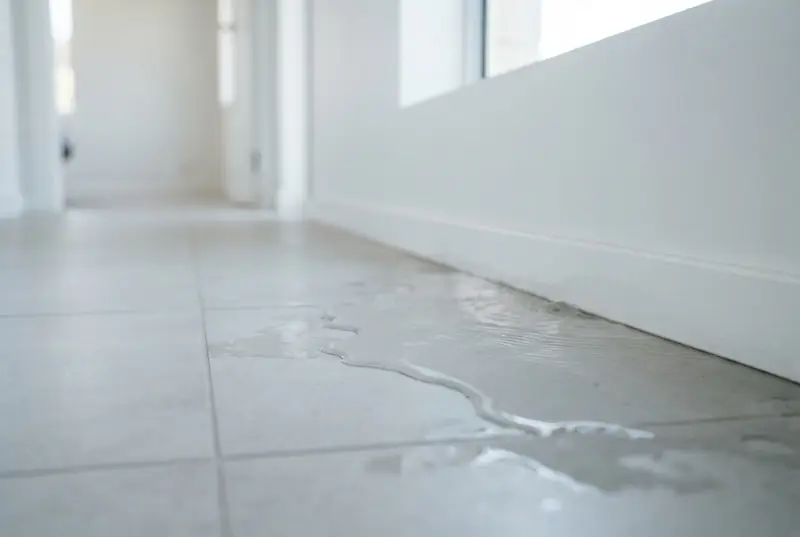
- The meter's low-flow indicator spins with all taps closed
- A water bill that jumps with no change in use
- A warm patch on a tile or wood floor
- Running water heard in a wall when nothing is on
- A ceiling stain, soft drywall or musty smell that keeps returning
Questions from Flower Mound
Our water bill jumped but nothing looks wet. Where do we start?
With the meter. Turn off every tap, the ice maker and the sprinkler controller, then watch the low-flow indicator. If it turns, close your house valve: a meter that stops points indoors, one that keeps moving points to the yard line. The Town reads meters monthly by drive-by radio, so a leak can run a full billing cycle before anyone notices.
The leak might be in the sprinkler system. Is that plumbing or irrigation?
Both trades touch it. The backflow device and everything past it belong to the irrigation side, and the Town's irrigation permits name a registered backflow tester to test that device. A leak on the house supply before the irrigation tee is plumbing. The detection marks which side is losing water, so the right trade gets the call.
Can I test for a hidden leak on my own?
Yes. Turn off every fixture, the ice maker and sprinklers included, and watch the leak indicator on the water meter. If it turns, shut the valve where the main enters the house. A dial that then goes still puts the leak inside; one that keeps moving puts it underground, on the meter's side of that valve.
Booking in Flower Mound
Call (469) 940-4415 to book leak detection. Take a meter reading first and note any spot that is wet, warm or stained. If water is visibly running, close the main shut-off. Have a recent water bill handy if the bill was your first clue.